 Image 1 of 1
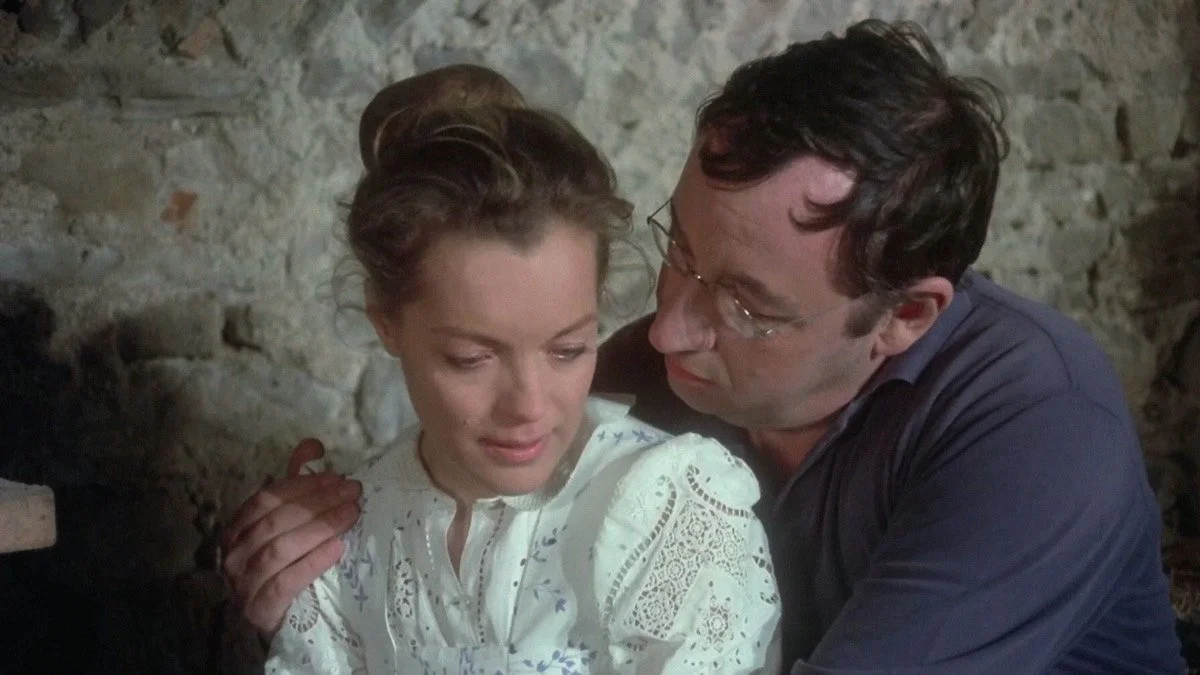
Le vieux fusil (1975)
£0.00
(The Old Gun)

Country: FR/GER
Technical: col 103m
Director: Robert Enrico
Cast: Philippe Noiret, Romy Schneider, Jean Bouise
Synopsis:
As the Allies close in on their occupiers, a Montauban surgeon takes time off to visit his wife and daughter at their country hideaway, but an SS detachment has got there first.
Review:
Filmed at Bruniquel in Tarn-et-Garonne for the château sequences, this impassioned war film about a man of medicine driven to mass murder treads a dangerous line between Lacombe Lucien-style re-examination of wartime behaviours, and anti-fascist revenge porn. In this regard it is stronger in its opening section around the hospital (with unusually polite Germans) than in the village second and third acts (Militia replaced by dastardly Nazis). Technically, it is beyond reproach, but it is padded out with flashbacks to show us the couple's relationship in more detail, and lays on the raping-killing-stealing-vandalism with a trowell. Clearly a reaction to the bowdlerising of the West German release prints, but there is no excuse for the partie de campagne bookends overlaid with de Roubaix's César-winning maudlin refrain. Somewhere within is an affectingly poignant tale of a boy's misuse of his father's old hunting rifle, but subtlety is drowned out in literalness.
(The Old Gun)
Country: FR/GER
Technical: col 103m
Director: Robert Enrico
Cast: Philippe Noiret, Romy Schneider, Jean Bouise
Synopsis:
As the Allies close in on their occupiers, a Montauban surgeon takes time off to visit his wife and daughter at their country hideaway, but an SS detachment has got there first.
Review:
Filmed at Bruniquel in Tarn-et-Garonne for the château sequences, this impassioned war film about a man of medicine driven to mass murder treads a dangerous line between Lacombe Lucien-style re-examination of wartime behaviours, and anti-fascist revenge porn. In this regard it is stronger in its opening section around the hospital (with unusually polite Germans) than in the village second and third acts (Militia replaced by dastardly Nazis). Technically, it is beyond reproach, but it is padded out with flashbacks to show us the couple's relationship in more detail, and lays on the raping-killing-stealing-vandalism with a trowell. Clearly a reaction to the bowdlerising of the West German release prints, but there is no excuse for the partie de campagne bookends overlaid with de Roubaix's César-winning maudlin refrain. Somewhere within is an affectingly poignant tale of a boy's misuse of his father's old hunting rifle, but subtlety is drowned out in literalness.